What Is Soft Washing? How It Works and Why It's Better for Your Home
What is soft washing? A low-pressure, detergent-based cleaning method for roofs, siding and painted surfaces — how the chemistry works, what it's safe for, and how it compares.
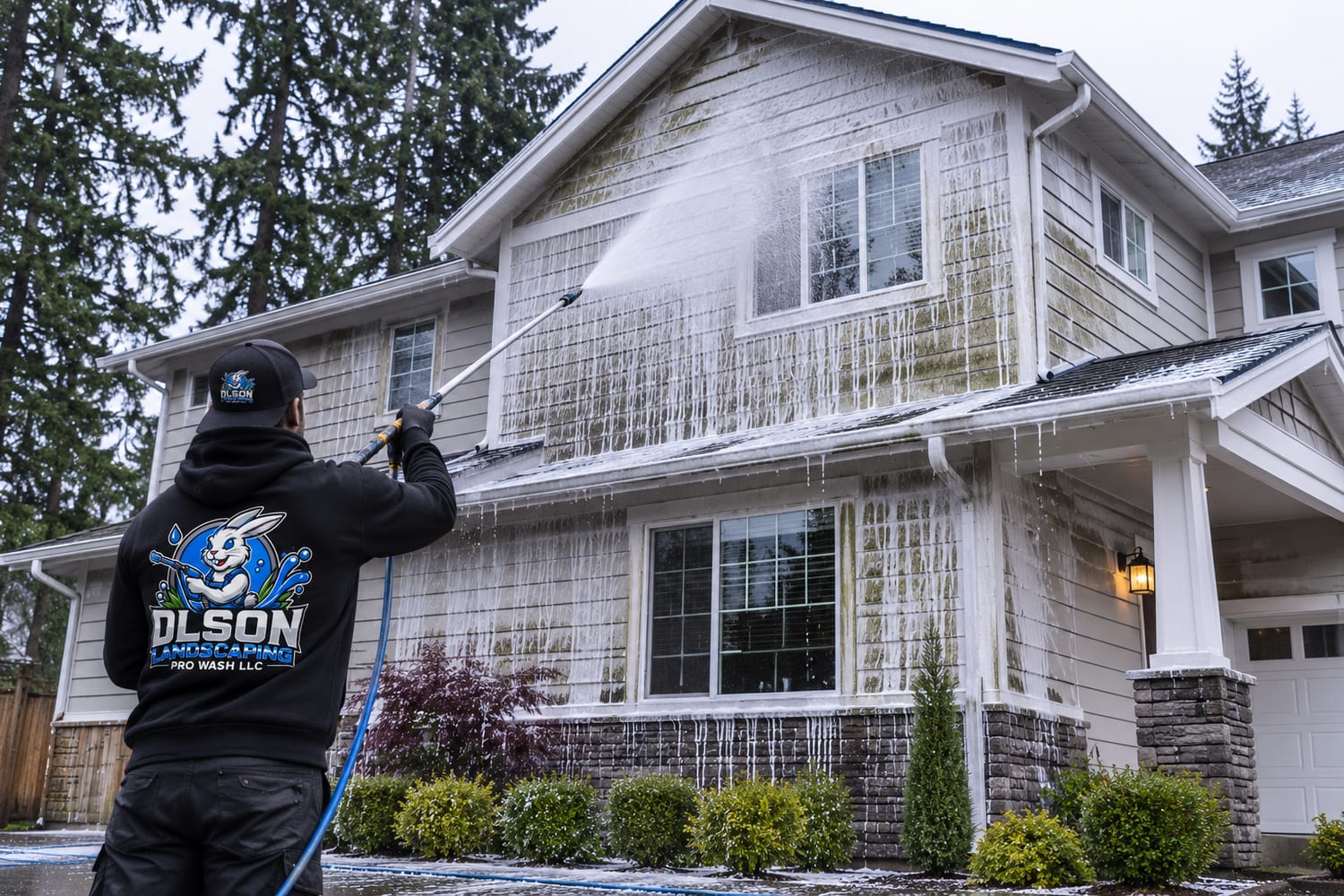
“Soft washing” gets used as a buzzword, so here’s the plain version: soft washing is cleaning a surface with a detergent solution and low pressure instead of high pressure. The chemistry does the work; the water just rinses. It’s the standard method for anything on a house that a pressure washer would damage — which is most of the house.
How soft washing works
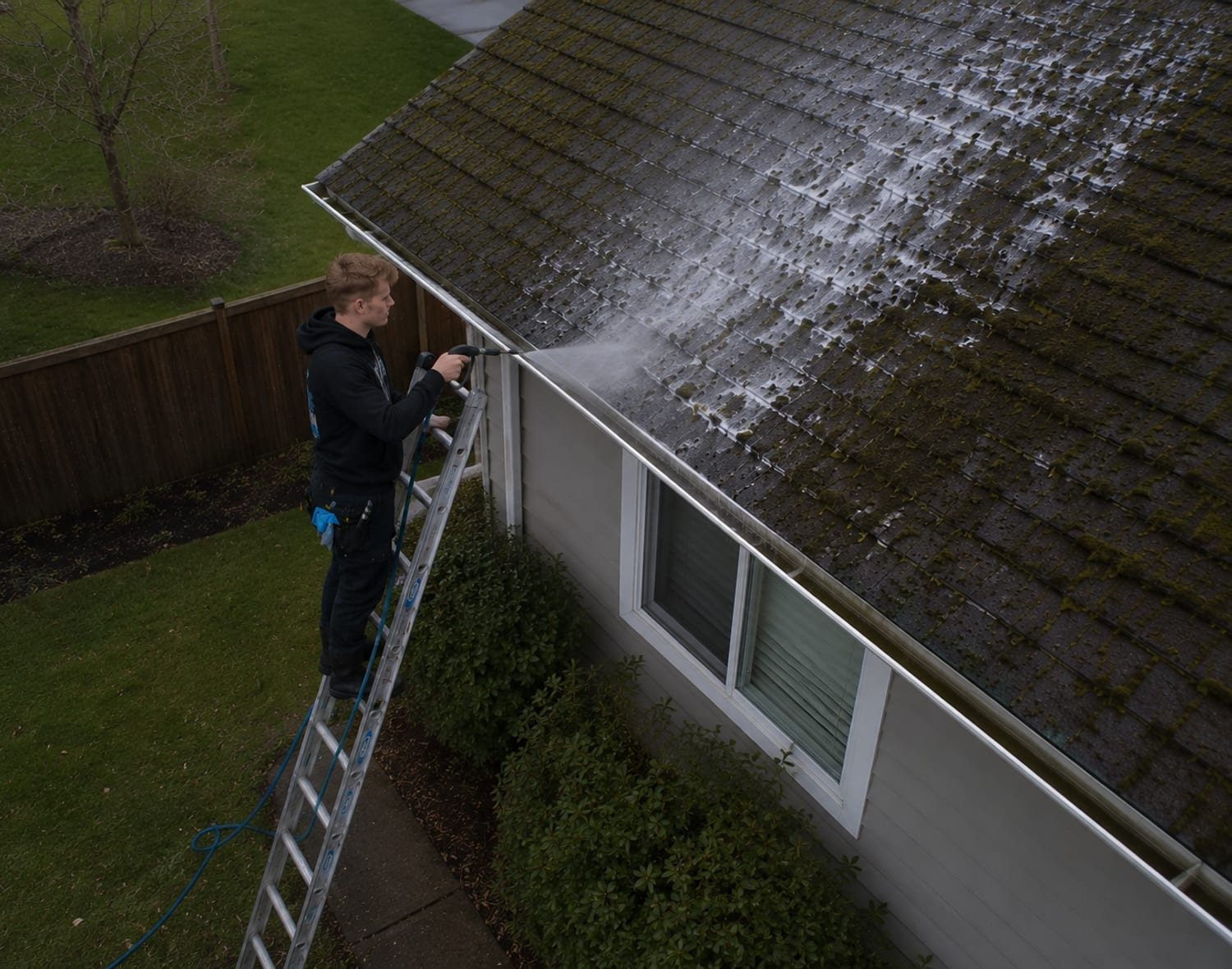
- Apply a cleaning solution. A blend of detergents, surfactants and a cleaning agent (usually a controlled dilution of sodium hypochlorite for biological growth) is applied at low pressure.
- Let it dwell. The solution sits for several minutes and breaks down the organic growth — algae, moss spores, mildew, lichen — at the root, plus the general grime and film.
- Agitate if needed. Heavier areas get a soft brush.
- Rinse gently. A low-pressure rinse carries everything away. The pressure at the surface is about what comes out of a garden hose.
The key difference from pressure washing: nothing is being blasted. A pressure washer at 2,000–4,000 PSI removes dirt by force. Soft washing removes it by killing and dissolving it, so it works on delicate surfaces and it kills growth at the root instead of just knocking off the top layer — which is why the results last two to three times longer.
The chemistry, briefly
- Surfactants break the surface tension of water so the solution spreads into pores and film instead of beading off. This is what lets a low-pressure application actually clean.
- Sodium hypochlorite, properly diluted, kills algae, mold, mildew and moss. It’s the same active ingredient as household disinfectants. The EPA maintains registration and safety information on hypochlorite products and their proper use.
- A rinse agent / neutralizer helps the solution clear cleanly and protects landscaping.
Concentrations matter enormously — this is where experience counts. Too weak and it doesn’t work; too strong and you can lighten a stain or stress a plant. A good soft wash is dialed to the surface and the growth.
What soft washing is best for
| Surface | Method |
|---|---|
| Asphalt shingle & metal roofs | Soft wash — always |
| Vinyl, fiber-cement, aluminum, wood siding | Soft wash |
| Stucco and EIFS | Soft wash |
| Painted or stained wood, trim, soffits, fascia | Soft wash |
| Composite decking, pergolas, fences | Soft wash / low pressure |
| Concrete driveways, walks, patios | Pressure wash (surface cleaner) |
| Pavers, stone, unpainted masonry | Pressure wash |
The rule of thumb: if it’s porous and tough, pressure wash it. If it’s coated, layered, or up high, soft wash it. Our soft wash vs pressure wash guide goes surface by surface.
Is it safe for plants and pets?
Yes, when it’s done properly. We pre-wet all landscaping so the solution can’t concentrate on foliage, tarp sensitive plants, keep the mix at the right strength, and rinse everything thoroughly afterward. Runoff is controlled per Washington Department of Ecology guidance. Pets should stay inside during the wash and off treated surfaces until dry — same as after mopping with any cleaner.
Why it’s better for your home
- No granule loss on roofs, no forced water under siding, no etched wood
- Kills growth at the root — 2–3 year results instead of one season
- Even, streak-free finish — no “zebra stripes” from an inconsistent pressure pass
- Warranty-safe — it’s the method ARMA and shingle manufacturers specify
- Gets into texture — stucco, wood grain and lap siding seams clean better with solution than with a pressure cone
Frequently asked questions
Does soft washing use bleach? It uses a controlled, diluted form of sodium hypochlorite for biological growth, thoroughly rinsed and buffered. It’s not the same as pouring laundry bleach on your house — concentration and rinsing are the whole game.
Will it damage my landscaping? Not with proper pre-wetting and rinsing. We’ve soft washed thousands of square feet next to prize gardens without issue.
How long does a soft wash last? Roofs 2–3 years; house siding often looks clean for 2+ years depending on shade and exposure.
Can I soft wash my own house? The mixing and the ladder work are the risky parts. Getting the concentration wrong either wastes your time or lightens your siding, and most homeowners don’t have a safe way to reach a second story.
Does it smell? There’s a faint chlorine smell during the wash that clears as it dries and rinses.
Get a soft wash quote
Roof, siding, or both — call or text (425) 446-0547 or send photos through the quote form.