Soft Wash vs Pressure Wash: What's Right for Your Washington Home?
The difference between soft washing and pressure washing, which surfaces need which method, and why the wrong one can cost you thousands in siding and roof damage in the wet PNW.
“Pressure washing” gets used as a catch-all, but professionals actually use two different methods — and in the Pacific Northwest, where moss and algae are relentless, choosing the wrong one is the single most common way exteriors get damaged. Here’s how to tell them apart and know which your Washington home needs.
What is pressure washing?
Pressure washing uses a high-pressure stream of water — typically 1,500 to 4,000 PSI — to physically blast dirt and buildup off hard surfaces. Hot-water units add heat to cut grease and gum. The cleaning power comes from force.
Best for:
- Concrete driveways, sidewalks and patios
- Brick and stone (at controlled pressure)
- Paver walkways
- Unpainted masonry
- Heavy equipment, trailers and dumpster pads
Not for: roofs, vinyl or aluminum siding, stucco, LP SmartSide, cedar, screens, soffits, window seals, or anything painted. Too much pressure on these will etch, gouge, force water behind the surface, or strip the finish.
What is soft washing?
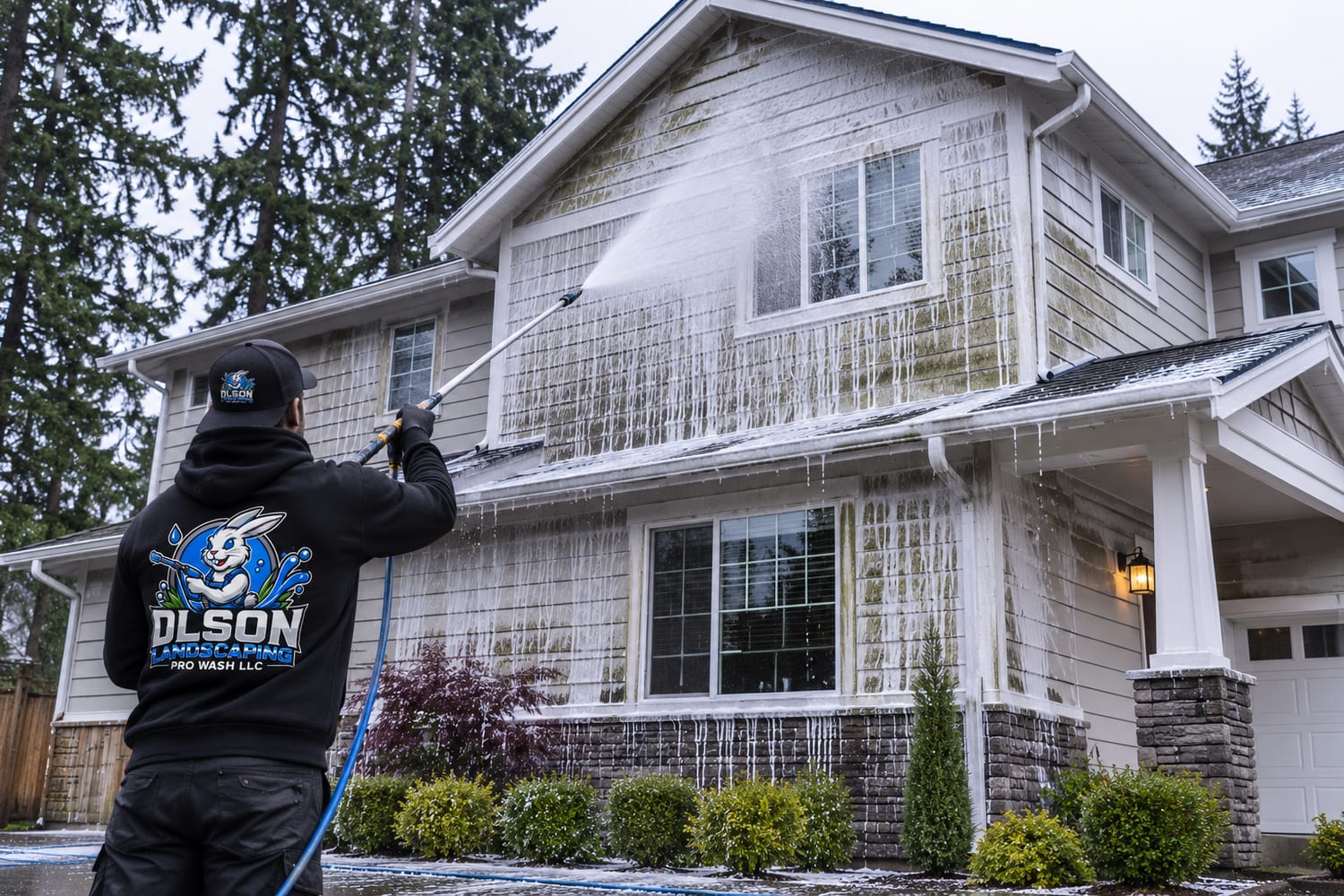
Soft washing uses low pressure — about the force of a garden hose — combined with professional biodegradable detergents and biocides. The chemistry does the work: it breaks down algae, mold, mildew, lichen and moss at the root, then everything is rinsed away gently.
Best for:
- Asphalt and metal roofs (the only safe method)
- Vinyl, aluminum, fiber-cement and engineered-wood siding
- Stucco and EIFS
- Cedar and painted wood
- Screens, soffits, fascia and gutter faces
- Fences and pergolas
Because soft washing kills growth rather than knocking it loose, results last four to six times longer than pressure alone — which matters a lot in a climate that regrows moss this fast.
Quick reference
| Surface | Method |
|---|---|
| Asphalt / metal roof | Soft wash only |
| Vinyl or aluminum siding | Soft wash |
| Stucco / EIFS | Soft wash |
| Cedar or painted wood | Soft wash |
| Concrete driveway / walk | Pressure wash |
| Brick / stone | Pressure wash (controlled) |
| Pavers | Pressure wash + re-sand |
| Deck (wood or composite) | Low pressure + detergent |
| Fence | Soft wash |
“Is pressure washing bad for my siding?”
It can be. On vinyl and aluminum, high pressure can crack aging panels, drive water behind the siding into the wall cavity where it causes mold and rot, blow out caulk lines and window seals, and leave permanent lap-mark streaks. This is why a professional house wash is always a soft wash. If a contractor is dragging a high-pressure wand across your siding, stop them.
Why roofs are non-negotiable
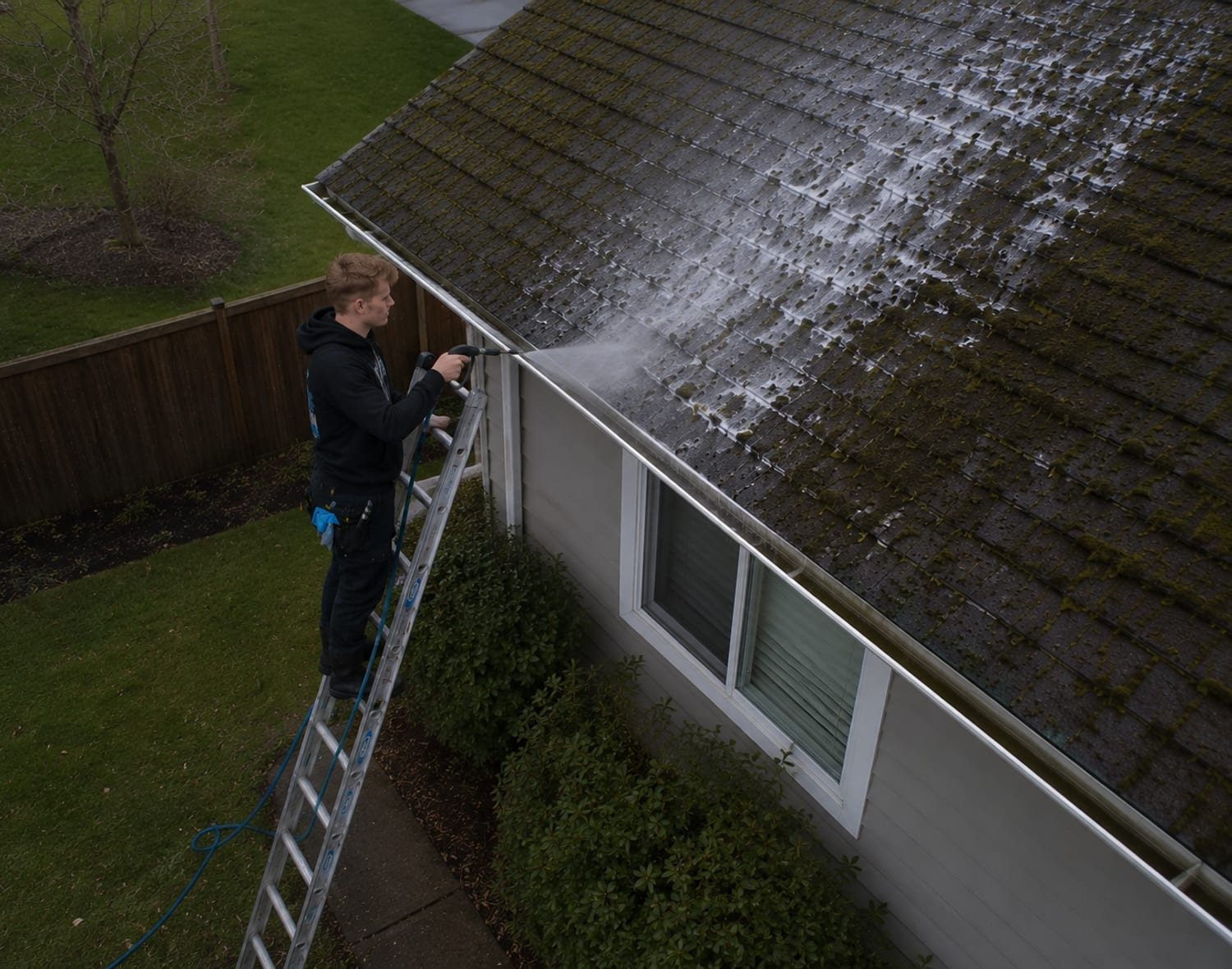
The moss clumps and black streaks on your shingles are living organisms — and around here, moss is the bigger threat. Pressure washing a roof strips the protective granules, dramatically shortens shingle life, and voids most manufacturer warranties. The Asphalt Roofing Manufacturers Association and shingle makers specifically call for low-pressure chemical cleaning — exactly what roof cleaning is.
How Olson Pro Wash decides
- Walk the property and identify each surface and its condition.
- Soft wash roof, siding, soffits and any delicate area — landscaping pre-wet and protected.
- Pressure wash concrete, brick and pavers with the correct tip, pressure and temperature.
- Rinse everything down and walk the finished job with you.
One visit, both methods, zero damage.
Have a surface you’re not sure about? Send a photo and we’ll tell you which method it needs and what it will cost — free.