Soft Wash vs Pressure Wash: Which Is Right for Your Roof?
Soft wash vs pressure wash for your roof — why high pressure strips shingle granules, why soft washing is manufacturer-recommended, and when each method actually belongs.
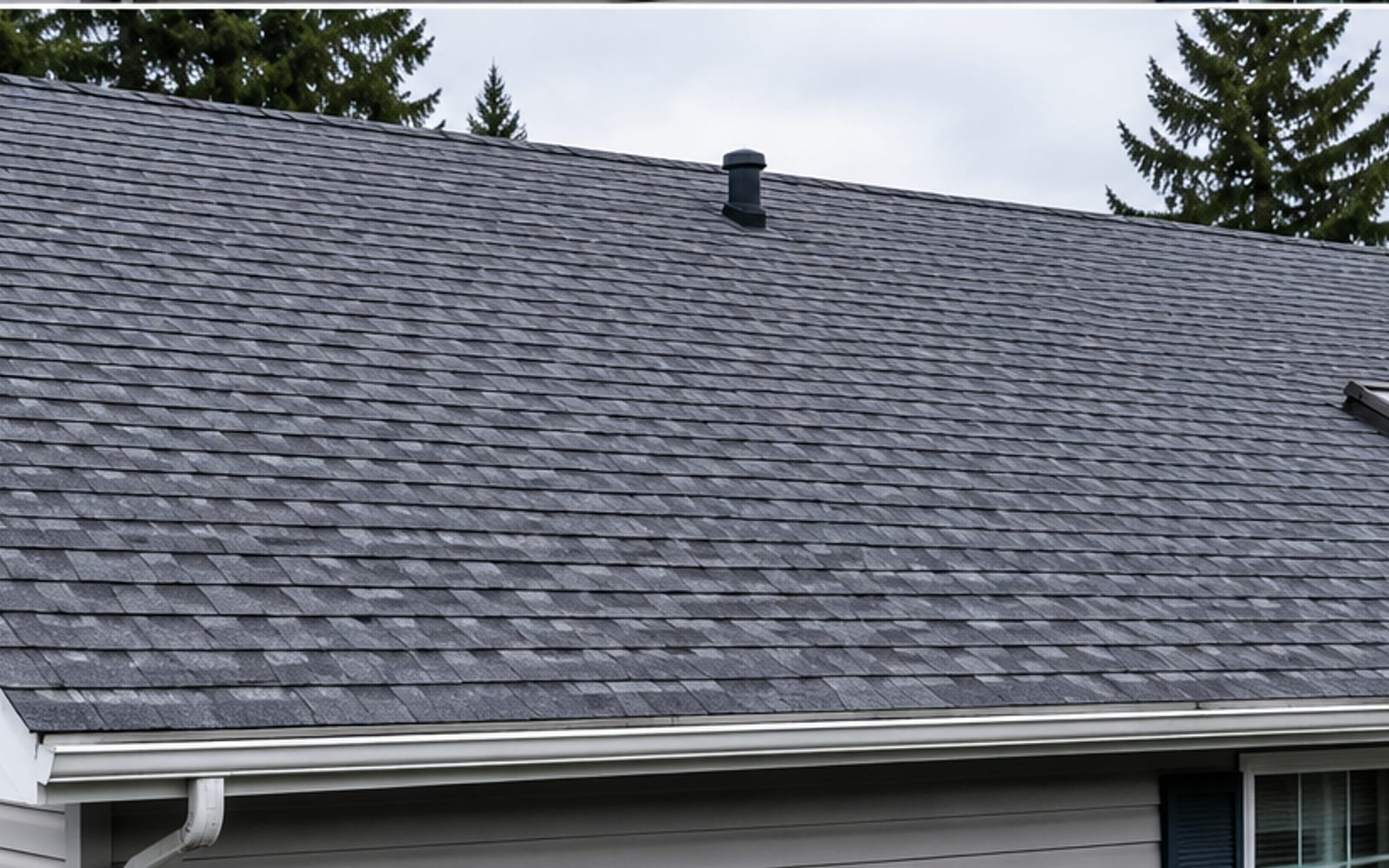
If you’re looking at a mossy roof and pricing out a cleaning, you’ll see two very different approaches — and two very different prices. One is a pressure wash: a machine throwing water at 1,500–4,000 PSI. The other is a soft wash: low pressure, a cleaning solution that does the work chemically, and a gentle rinse. For an asphalt shingle roof, the choice isn’t close. Here’s why.
What each method actually does
Pressure washing relies on mechanical force. Water hits the surface hard enough to blast off whatever’s on it. That’s the right idea for concrete, which is dense and doesn’t care. It’s the wrong idea for anything layered, coated, or fragile.
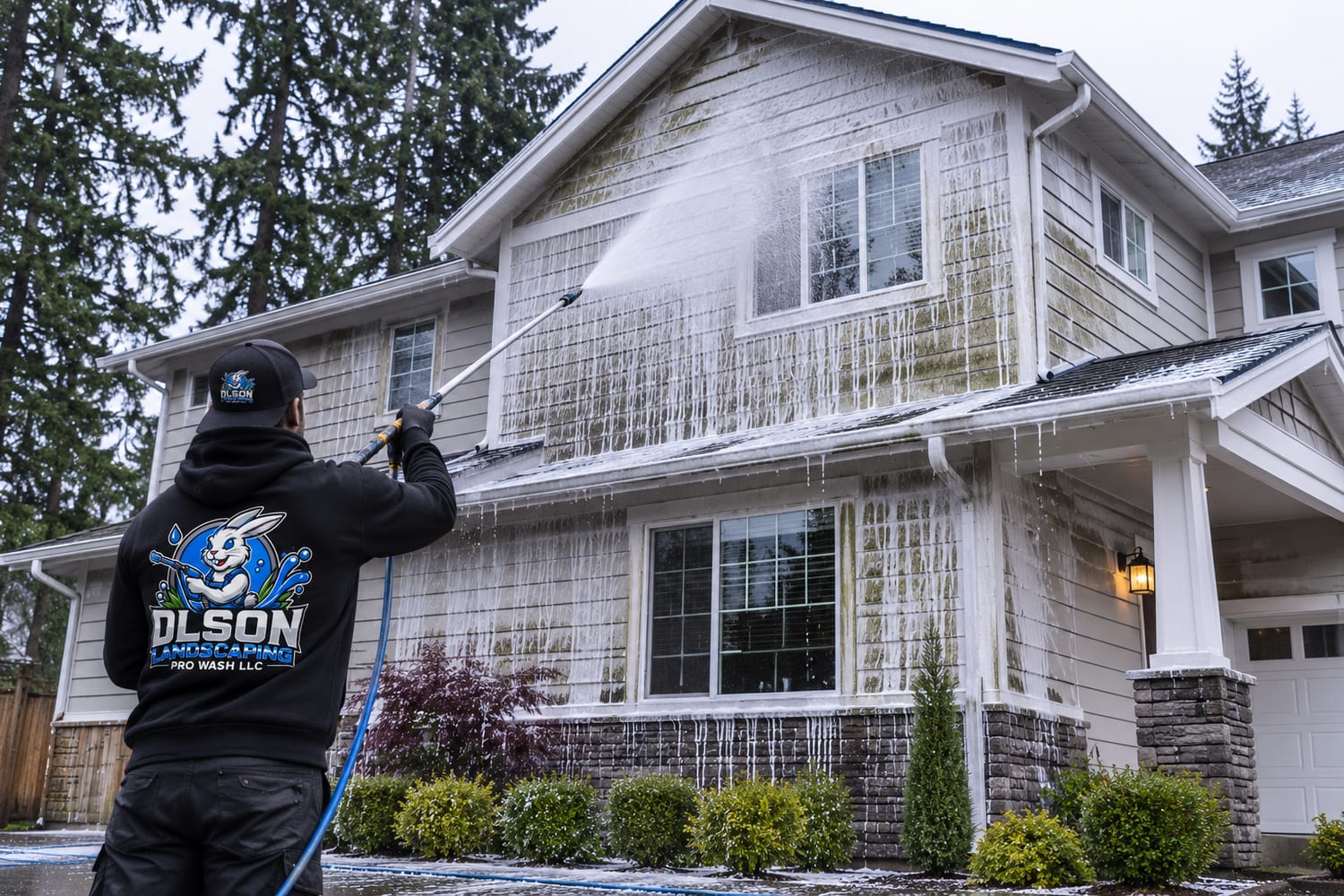
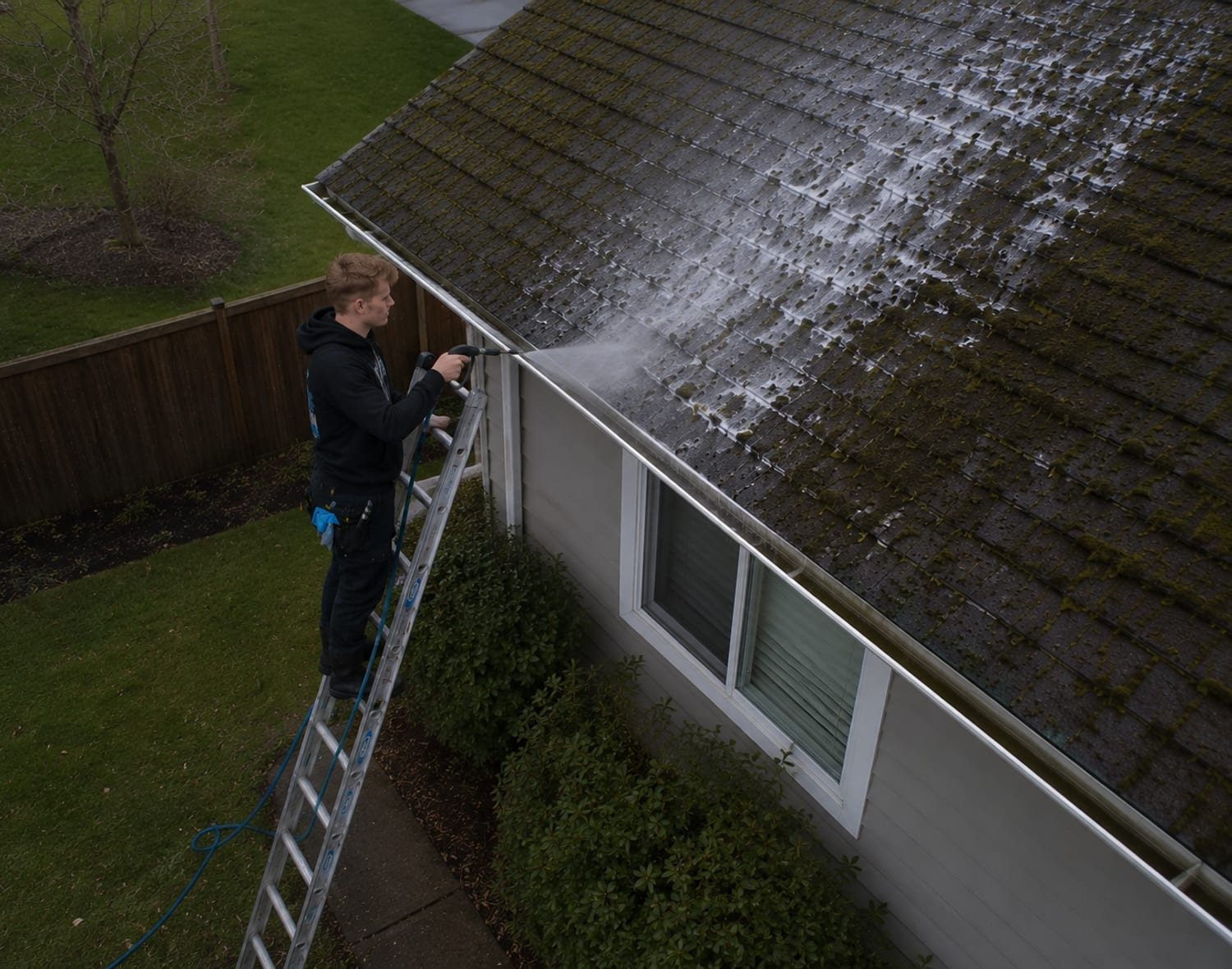
Soft washing relies on chemistry. A detergent-and-cleaning-agent solution is applied at garden- hose pressure, left to dwell so it kills moss, algae and lichen at the root, then rinsed. The pressure never gets near the roof — the solution does the work. This is what we use for roof cleaning and house washing.
Why pressure washing damages shingles
An asphalt shingle is a mat saturated with asphalt and armored with a layer of ceramic-coated mineral granules. Those granules are the shingle’s sunscreen and fire protection. They’re glued down — and they come off under pressure.
Run a pressure washer across a shingle roof and you’ll see grit wash into the gutters. That’s years of UV protection gone in an afternoon. Bare spots age fast, get brittle, curl, and start leaking. High pressure also drives water up under the shingles, backwards against the way they shed, soaking the underlayment and decking.
The Asphalt Roofing Manufacturers Association (ARMA) and every major shingle manufacturer say the same thing: clean asphalt shingles with low pressure and cleaning solution, not a pressure washer. Most shingle warranties are explicitly voided by high-pressure cleaning. The U.S. Consumer Product Safety Commission also notes how easily a pressure washer damages building surfaces and injures the operator — a shingle roof is a bad place to learn that.
Side by side
| Pressure wash | Soft wash | |
|---|---|---|
| Pressure at the surface | 1,500–4,000 PSI | ~40–100 PSI (garden hose) |
| How it cleans | Mechanical force | Cleaning solution + dwell time |
| Kills moss at the root | No — knocks off the top | Yes |
| Granule loss | Significant | None |
| Shingle warranty | Usually voided | Compliant with ARMA guidance |
| Results last | ~1 season (regrows from roots) | 2–3 years |
| Right for | Concrete, pavers, brick flatwork | Roofs, siding, stucco, painted/stained wood |
When is pressure washing the right call?
Plenty of times — just not on your roof. Controlled high pressure through a surface cleaner is the correct tool for:
- Concrete driveways, walkways and patios
- Paver and stone hardscapes
- Unpainted masonry and block walls
- Heavy equipment, dumpster pads, commercial flatwork
The skill is matching the method to the surface. A good contractor owns both a pressure washer and a soft wash setup and knows which one your project needs. Our soft wash vs pressure wash guide for your whole home breaks it down surface by surface.
What our roof soft wash includes
- A roof and gutter inspection before we quote
- Landscaping pre-wet and protected
- In-house roof treatment applied at low pressure, left to dwell to kill growth at the root
- A full, careful rinse
- Loosened moss and debris cleared from the roof and gutters
- Performed to ARMA and shingle-manufacturer cleaning guidelines
We offer a premium recommended soft wash and a lower-cost budget powder treatment — we’ll explain both when we quote.
Frequently asked questions
Is soft washing strong enough to remove thick moss? Yes. The solution kills the moss and its root structure; the dead growth then releases over the following days and weeks, or we clear it gently on the spot. Force isn’t what removes moss — killing it is.
My neighbor’s roof was pressure washed and looks fine. It looks fine now. Granule loss shows up over the next few years as accelerated aging, brittle shingles and early replacement. The bill is just deferred.
Can a metal roof be pressure washed? Standing-seam metal tolerates more pressure than asphalt, but soft washing still gives a better, longer-lasting result without risking the finish or driving water into seams.
How long will a soft wash last on my roof? Two to three years in our climate, longer if the roof is kept clear of debris and overhanging branches are trimmed.
Does soft washing hurt plants? Not when done correctly — we pre-wet and rinse landscaping and control runoff per Washington Department of Ecology guidance.
Get a roof soft wash quote
Call or text (425) 446-0547, or send photos through the quote form and I’ll tell you exactly what your roof needs — and what it doesn’t.