How Long Does Roof Cleaning Last? (And How to Make Results Last Longer)
How long does roof cleaning last? Usually 2–3 years in the Pacific Northwest. What shortens results, what extends them, and the maintenance habits that keep a roof clear.
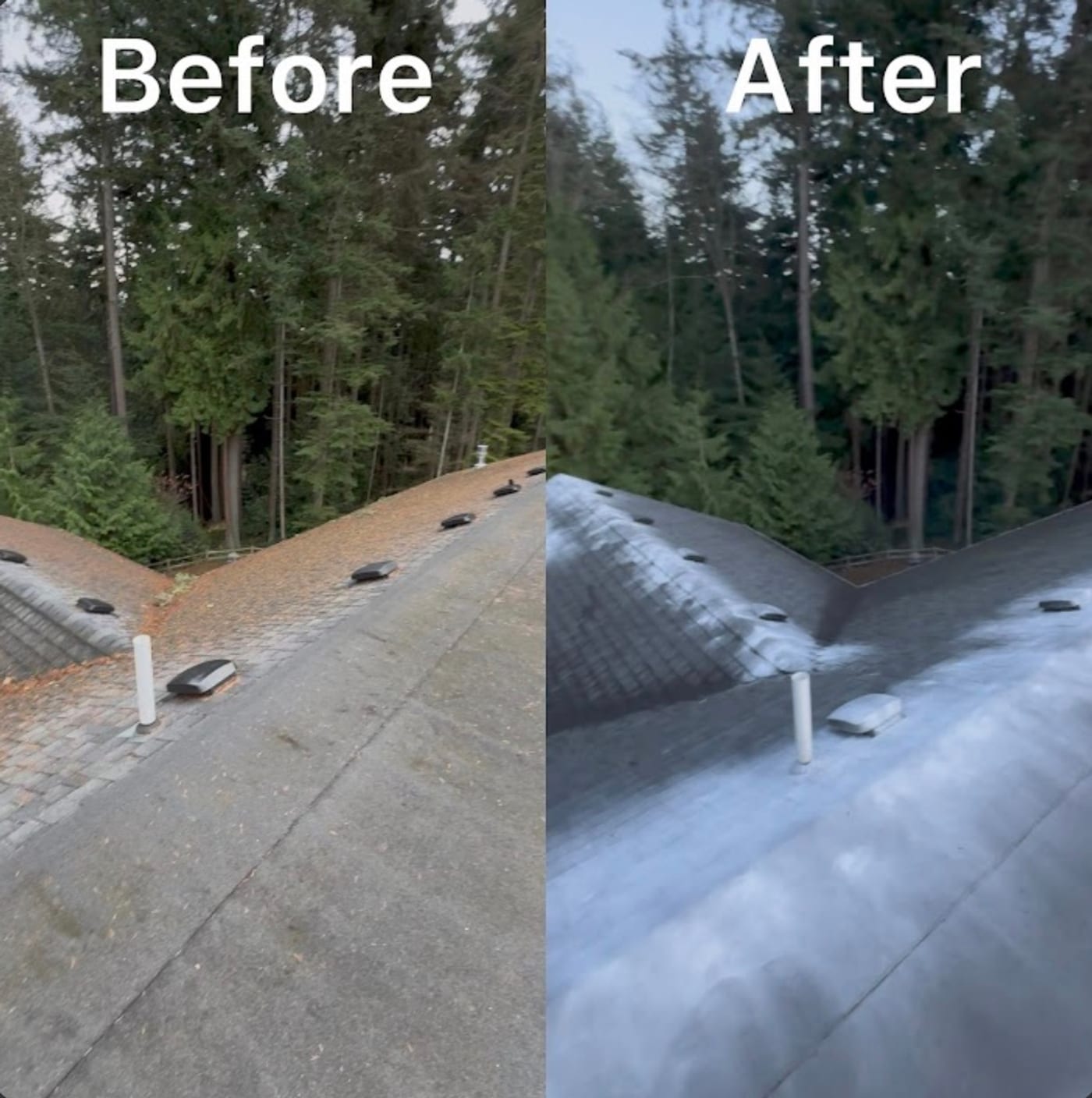
A properly done roof soft wash keeps a Pacific Northwest roof visibly clean and moss-free for about 2 to 3 years. Some roofs go longer; heavily shaded ones under trees are closer to 18 months. The number depends less on the cleaning and more on what happens to the roof afterward.
Why “2–3 years” and not “forever”
Moss and algae aren’t a one-time infection you cure. They’re spores riding in on the wind and the rain, constantly, landing on a surface that in our climate stays damp for months at a time. Washington State University’s Hortsense describes moss as a symptom of shade and moisture — remove it today and the same conditions start growing it again tomorrow.
A good treatment kills what’s there down to the root and clears it. That resets the clock. How fast the clock runs back down is about exposure and debris.
What shortens your results
- Shade. North-facing slopes and tree-covered roofs re-grow two to three times faster than sunny exposures.
- Tree debris. Fir needles and leaf litter hold moisture on the shingles and feed regrowth. This is the #1 accelerant.
- Clogged gutters. A backed-up gutter keeps the whole roof edge wet.
- Low-slope sections. Porch roofs and valleys that don’t drain fast stay wet and grow moss first.
- A scrape-and-blow “cleaning.” If the last company knocked the moss off dry instead of killing it, it regrows in months — and took granules with it on the way out.
- Pressure washing. Strips the granules that give algae a rougher surface to grip, and ages the shingle so it holds moisture. Never do it. It’s against ARMA guidance and voids most warranties.
What extends your results
Keep the roof clear of debris. Blow or brush the needles and leaves off a couple of times a year, especially out of the valleys and off the north slopes. This alone can turn a 2-year result into a 4-year one.
Trim overhanging branches. More sun and airflow on the roof, less shade and constant drip. It also cuts down the debris load.
Keep the gutters flowing. Clean them spring and fall so the roof edge can dry between rains.
Get on a maintenance schedule. A light re-treatment at the 2-year mark — before moss re- establishes — is faster and cheaper than waiting for thick growth. Our maintenance plans fold roof, gutters and a house wash into one recurring visit at a lower per-visit rate.
Skip the zinc strips. We don’t install them and don’t recommend them — they streak the roof, lose effectiveness as they dull, and don’t replace keeping the roof clear. A thorough kill plus debris control does more.
A simple maintenance rhythm
| Timing | Task |
|---|---|
| Twice a year (spring & fall) | Blow debris off the roof; clean the gutters |
| Once a year | Quick visual check — valleys, north slopes, gutter growth |
| Every 2–3 years | Full roof soft wash / re-treatment |
| As needed | Trim branches back off the roofline |
Frequently asked questions
Is there a treatment that lasts 10 years? No — not honestly, not here. Anyone promising that is selling something. Our climate doesn’t allow it.
Will one cleaning “cure” my moss problem? It clears it and resets the clock. Staying ahead of it after that is maintenance, not another full restoration.
How do I know when it’s time again? Green fuzz returning along the edges and valleys, black streaking coming back, or growth in the gutters. See how often should you clean your roof in the PNW.
Does a metal roof stay clean longer? Usually yes — smoother surface, better drainage — but shaded metal still grows algae and needs periodic soft washing.
Do you offer a warranty on the cleaning? We stand behind the work — the moss is killed and cleared when we leave. Longevity after that comes down to exposure and upkeep, which is what the maintenance plan is for. See our guarantee.
Keep your roof clear
Call or text (425) 446-0547 or request a quote and ask about getting on a maintenance schedule.