Does Moss Actually Damage Your Roof? What Washington Homeowners Need to Know
Does moss damage your roof? Yes — here's how it lifts shingles, holds moisture and rots decking, the real cost of ignoring it, and how to tell moss from algae and lichen.
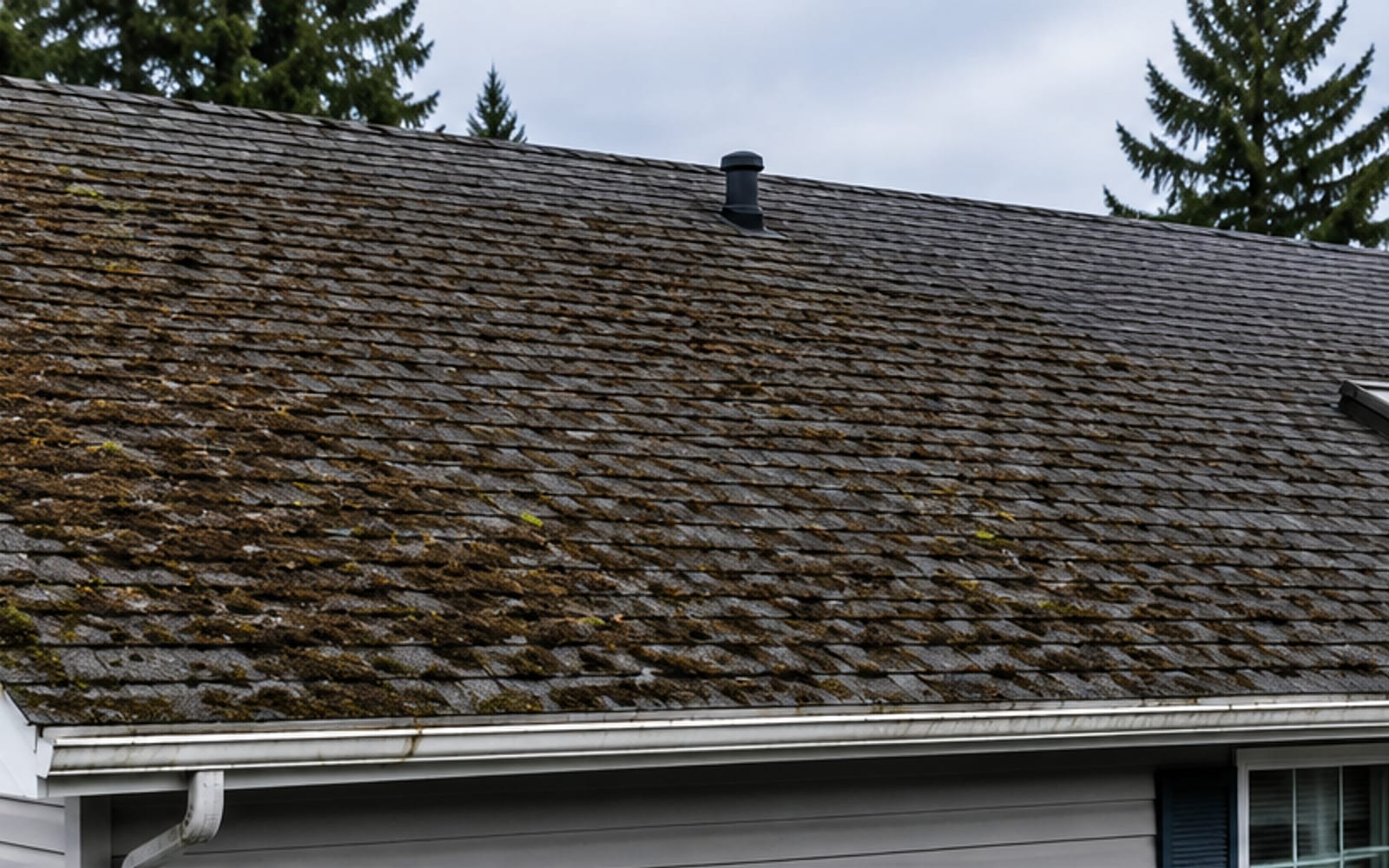
Every so often someone tells me moss on a roof is “just cosmetic” — a Pacific Northwest look, like green trim. I get why people want that to be true. It isn’t. Moss is one of the few roof problems that actively shortens the life of your shingles, and on a shaded Washington roof it does it fast. Here’s exactly how.
How moss damages shingles
It holds water against the roof. A dry shingle sheds rain in seconds. A shingle with a moss cushion on it stays damp for days. That constant moisture works into the shingle mat, degrades the asphalt, and in freezing weather expands in the tiny gaps and pries things apart.
It lifts shingle edges. Moss doesn’t just sit on top — it creeps under the bottom edge of each shingle and grows there, jacking the shingle up. Once an edge is lifted, wind gets under it and rain runs backward beneath it, straight onto the underlayment.
Its rhizoids dig in. Moss anchors with root-like rhizoids that work into the surface and between granules. Pulling established moss off takes granules with it — which is why you kill it first and remove it gently, never scrape a dry roof.
It clogs the drainage path. Moss and its debris wash into valleys and gutters, back water up under the shingles, and keep the whole roof edge wetter than it should be.
The Asphalt Roofing Manufacturers Association (ARMA) publishes guidance specifically on roof algae and moss because of the damage and the warranty implications — it’s a recognized problem, not a myth.
The timeline of ignoring it
| Stage | What’s happening |
|---|---|
| Year 1–2 | Green fuzz along edges and valleys, black algae streaking. Mostly cosmetic — but the roots are establishing. |
| Year 3–5 | Thick moss cushions. Shingle edges lifting. Granule loss accelerating. Damp spots in the attic after long rains. |
| Year 5+ | Underlayment saturated in spots, decking beginning to rot, leaks at valleys and penetrations. Now it’s a repair, not a cleaning. |
| The bill | A $299–$950 soft wash at year 2 vs. $1,500+ in repairs — or a $12,000–$25,000 full replacement years early. |
Washington State University’s Hortsense notes moss re- establishes quickly in shade and moisture, so a roof that’s been let go usually needs treatment plus a plan to keep it clear. Our what happens if you don’t clean your roof post covers the insurance and home-value side.
Moss vs. algae vs. lichen — know what you’re looking at
- Algae (Gloeocapsa magma): flat black streaks and stains running down the slopes. Doesn’t hold much water but spreads fast and looks terrible. Feeds on the limestone filler in shingles.
- Moss: raised, green (brown when dormant), spongy cushions — worst in valleys, on north slopes and along shaded edges. This is the one that lifts shingles and holds moisture.
- Lichen: crusty, flat, gray-green patches that look almost painted on. Bonds tightly to the granule surface and is the most stubborn to remove — it needs a proper dwell time to release.
All three are handled by the same soft wash approach: treat, let it dwell to kill at the root, rinse, clear. Which is present just affects how long the treatment needs to work.
What to do about it
- Have it soft washed — treated, killed at the root, rinsed, and the dead growth cleared. Never pressure washed; that strips granules and voids warranties.
- Keep debris off — needles and leaves feed regrowth. Blow the roof off a couple times a year, or fold it into a maintenance plan.
- Trim overhanging branches — more sun and airflow, less shade and drip.
- Clean the gutters — a backed-up gutter keeps the whole roof edge wet.
Frequently asked questions
If I kill the moss, do I still have to remove it? Yes — dead moss still holds water and looks bad. We clear it as part of the service; heavy mats sometimes release over a couple weeks and need a quick return pass.
Can moss be prevented completely? Not in this climate. You manage it — treat on a 2–3 year cycle and keep the roof clear between times.
Is a little algae streaking worth treating? It’s the cheapest time to treat. Streaking spreads every wet season and the stain sets in.
Will my homeowners insurance cover moss damage? Generally no — insurers treat it as deferred maintenance, and a moss-covered roof can even jeopardize a claim or renewal.
Get an honest assessment
Send photos of your roof and I’ll tell you what’s growing, how far along it is, and what it needs. Call or text (425) 446-0547 or request a quote.